When it comes to money, there's a lot to think about. Pensions, savings, ISAs, investments, mortgages… the list goes on!
That's why we recently teamed up with Edinburgh-based financial planners Melville Independent for an egg webinar, tackling some of the big money questions on our minds. From building a financial safety net to making your money work harder and planning for retirement, they shared practical tips to help us feel more confident about our finances.
Here are 10 money questions asked by eggs and answered by the experts, helping you make smarter decisions today for greater financial security and peace of mind tomorrow.
1. Where should my next £ go?
It depends on your personal circumstances, what you're saving for and when you'll need the money. First things first, think about what you can afford to set aside. Make sure your essential bills are covered and take stock of any outstanding debts, particularly those with high interest rates. Building an emergency savings pot is also sensible, giving you a financial safety net if life throws illness, redundancy or another unexpected event your way.
Once you've got those basics covered, think about your goals. Are you saving for a holiday next year or a house? Short-term goals generally suit accessible cash savings, while longer-term plans might benefit from investing or pension contributions.
If you’re wondering about overpaying your mortgage, that often comes down to your mortgage interest rate and your attitude towards debt. For some, the peace of mind that comes with reducing their mortgage is a huge relief.

2. Cash savings, ISAs, investments or pensions – what's the difference?
They all have their place, but understanding how they work can help you decide which is right for you.
- Cash savings: Ideal for emergency funds and shorter-term goals. Your money is generally easy to access, although inflation can reduce its spending power over time.
- Cash ISAs: Similar to ordinary savings accounts, but any interest earned is tax-free. A useful option if you want to save without taking investment risk.
- Stocks & Shares ISAs: Allow you to invest in assets such as funds and shares, with no UK Income Tax or Capital Gains Tax on returns within the ISA. Investments can rise and fall in value, so they're generally better suited to longer-term goals.
- Pensions: Designed primarily for retirement. You generally can't access the money until the minimum pension age.
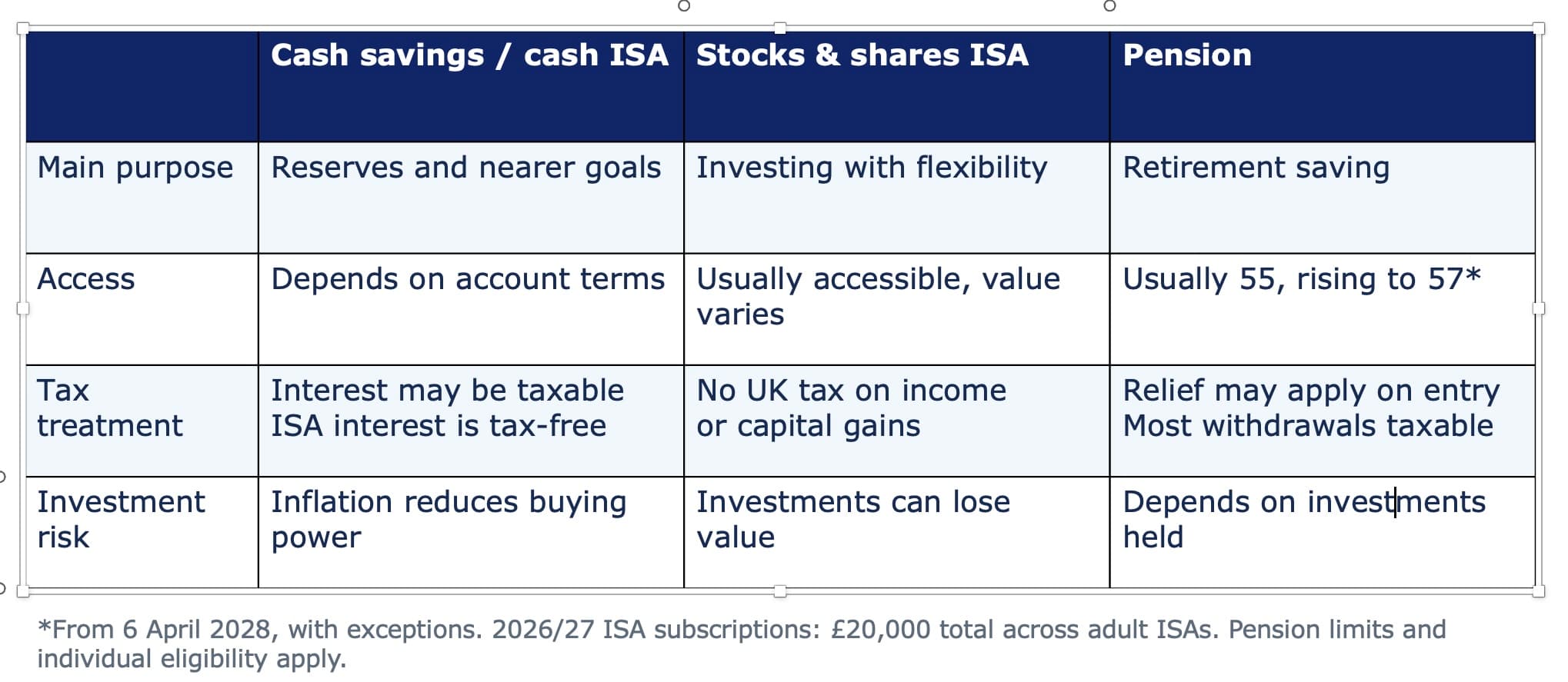
There's no single winner. The right combination depends on your goals, your appetite for risk and how soon you might need access to your money.
3. Will my pension actually be enough to retire comfortably?
“Enough” starts with the life you want to pay for. Think about your lifestyle and what you want retirement to look like.
For some, it's travelling the world. For others, it's enjoying more time with family and a slower pace of life. A good starting point is to work out how much you spend today. Do you expect this to increase or decrease at retirement. Take the time to map out your financial goals and expected future lifestyle. Nothing is perfect and an educated guess is still a good starting point.
Once you've got a rough idea of your future lifestyle and when you'd like to retire, you can start working out how much income you'll need.
A financial planner can help you forecast whether you're on track and identify any shortfalls while there's still time to do something about them.
4. Have I left it too late to start saving for retirement?
Absolutely not. Whether you're in your 30s, 40s, 50s or beyond, it’s never too late. If you're employed and haven't joined your workplace pension, ask HR about joining and employer payments. If you're self-employed, build pension payments into your budget. Pension provisions are part of paying yourself.
And even if you're low or not earning, you may still be able to contribute. Under current rules, an eligible person under 75 can often pay £2,880 net a year into a relief-at-source pension, becoming £3,600 gross.

5. How can I make my money work harder without taking unnecessary risks?
The key is understanding the relationship between risk, potential returns and time. Cash savings offer greater certainty over the amount you hold, while investments have the potential to grow faster over the long term, although their value can fall as well as rise.
It's also worth considering diversification, which simply means spreading your investments rather than putting all your eggs in one basket. A financial adviser can help you weigh up your options and build a plan that balances growth, security and access to your money.
6. I've got several pensions from different jobs. Should I combine them?
Consolidating can make your retirement savings easier to manage, giving you a clearer picture of your overall pension pot. It can also simplify administration for your loved ones should anything happen to you.
However, some older schemes offer valuable guarantees that could be lost if you transfer. Before making any decisions, it's worth checking whether your existing pensions are suitably invested and offer competitive fees.
And if you have a defined benefit pension, such as an NHS or teachers' pension, transferring it is a very different proposition and is generally not recommended.
7. Could gaps in my National Insurance record affect my State Pension?
Yes, and this is one of those checks that's well worth doing. Your State Pension entitlement depends on your National Insurance record, and gaps could mean receiving less than the full amount when you retire.
Under the new State Pension system, you need 35 qualifying years for the full State Pension, which is currently about £12,548 a year.
Gaps can happen for all sorts of reasons, including career breaks, periods of self-employment, time spent living abroad or years when you weren't earning enough to pay National Insurance. People can top up missing years by paying lump sums through voluntary contributions. You can normally pay to fill gaps from the previous six tax years, although exceptions apply.
Check your State Pension forecast by clicking here.

8. When can I start taking money from my pension?
Most people can currently access defined contribution pension savings from age 55, rising to 57 from April 2028, unless they qualify for an exception.
There are several ways to use your pension savings, depending on your circumstances. You might choose to take a tax-free lump sum, usually up to 25% within the applicable limits, leave the remainder invested and draw income as needed, or use some or all of your pot to purchase an annuity, which provides a guaranteed income.
But there are important tax considerations. Taking a large taxable withdrawal in one go could push you into a higher Income Tax bracket. Accessing your pension is a big financial decision. Understand your options and the long-term implications before making a move.
9. What's changing with pensions in April 2027?
From 6 April 2027, most unused pension funds and pension death benefits will be included in the value of a person's estate for Inheritance Tax purposes. Historically, many pension death benefits have sat outside the estate for Inheritance Tax purposes, making pensions a useful part of estate planning.
The changes mean that some families could face a larger Inheritance Tax bill, depending on the total value of the estate and the exemptions available. However, if you've been planning to leave your pension untouched to pass on to children or other beneficiaries, it's worth reviewing your arrangements.
A financial planner can help you understand how the changes might affect your estate and whether you need to reconsider how you use your pensions, savings and other assets.
10. If I want to feel more financially confident, what are three things I can do today?
- Know where you stand - Audit Yourself. Think, where am I now? Build a clear picture of your current position. Take a look at your last three months of bank statements. How much is coming in, what's going out and what's left over. Understanding your regular spending, outstanding debts and monthly surplus is the first step towards making more informed decisions.
- Get a clear picture of what you've got - Gather the details of your workplace pension, any old pension pots, ISAs, savings and investments. Check your State Pension forecast too. You might be pleasantly surprised by what you've accumulated, or discover areas that need a little attention.
- Think about where you want to be - What are your goals? Once you know what you're working towards, it's much easier to decide what to prioritise and where your money should go next. And don't feel you need to tackle everything at once. Small, consistent steps can make a meaningful difference over time.
A little planning goes a long way
Whether you're just starting to save, thinking about investing for the first time or getting serious about retirement, the most important thing is to start the conversation.
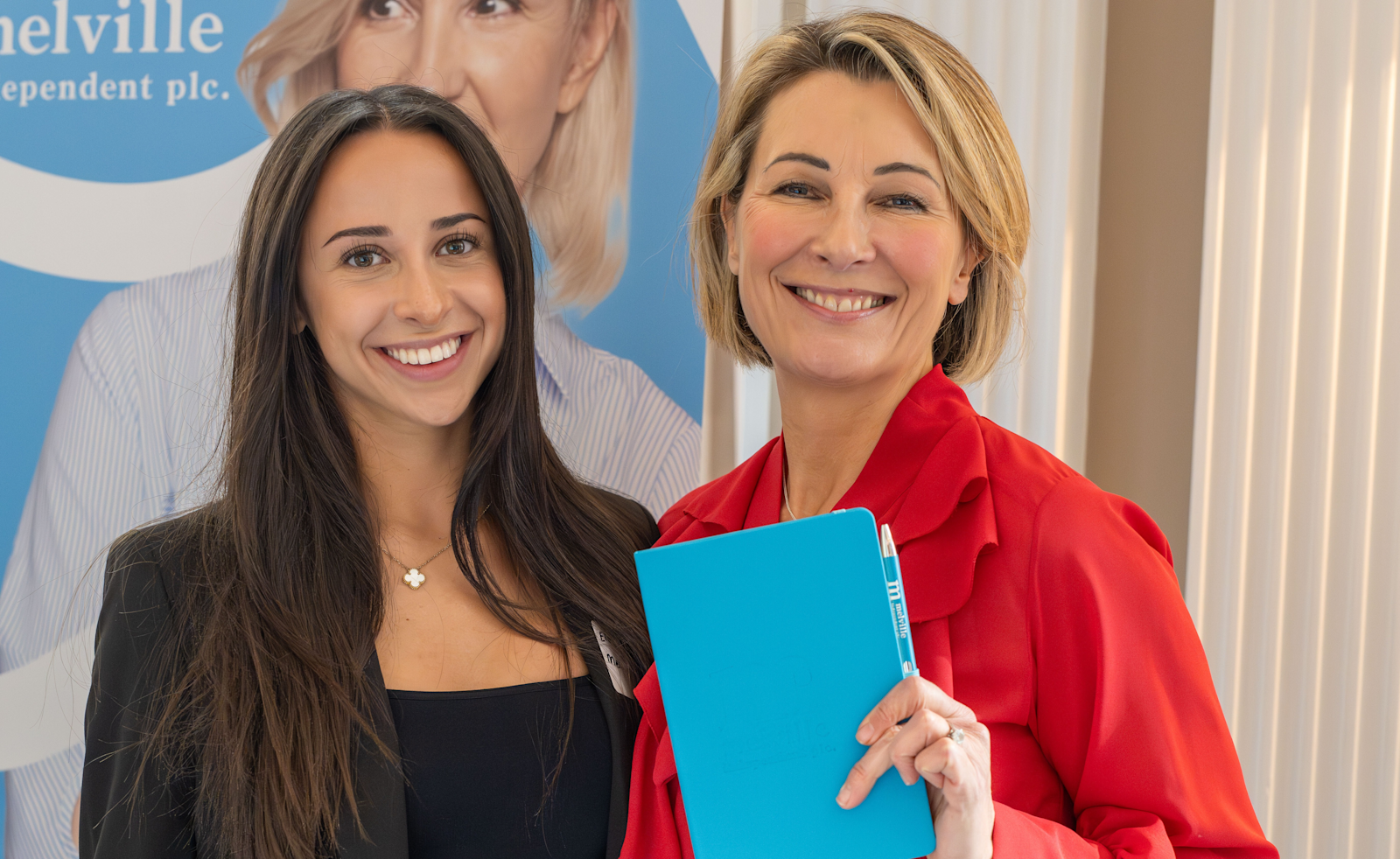
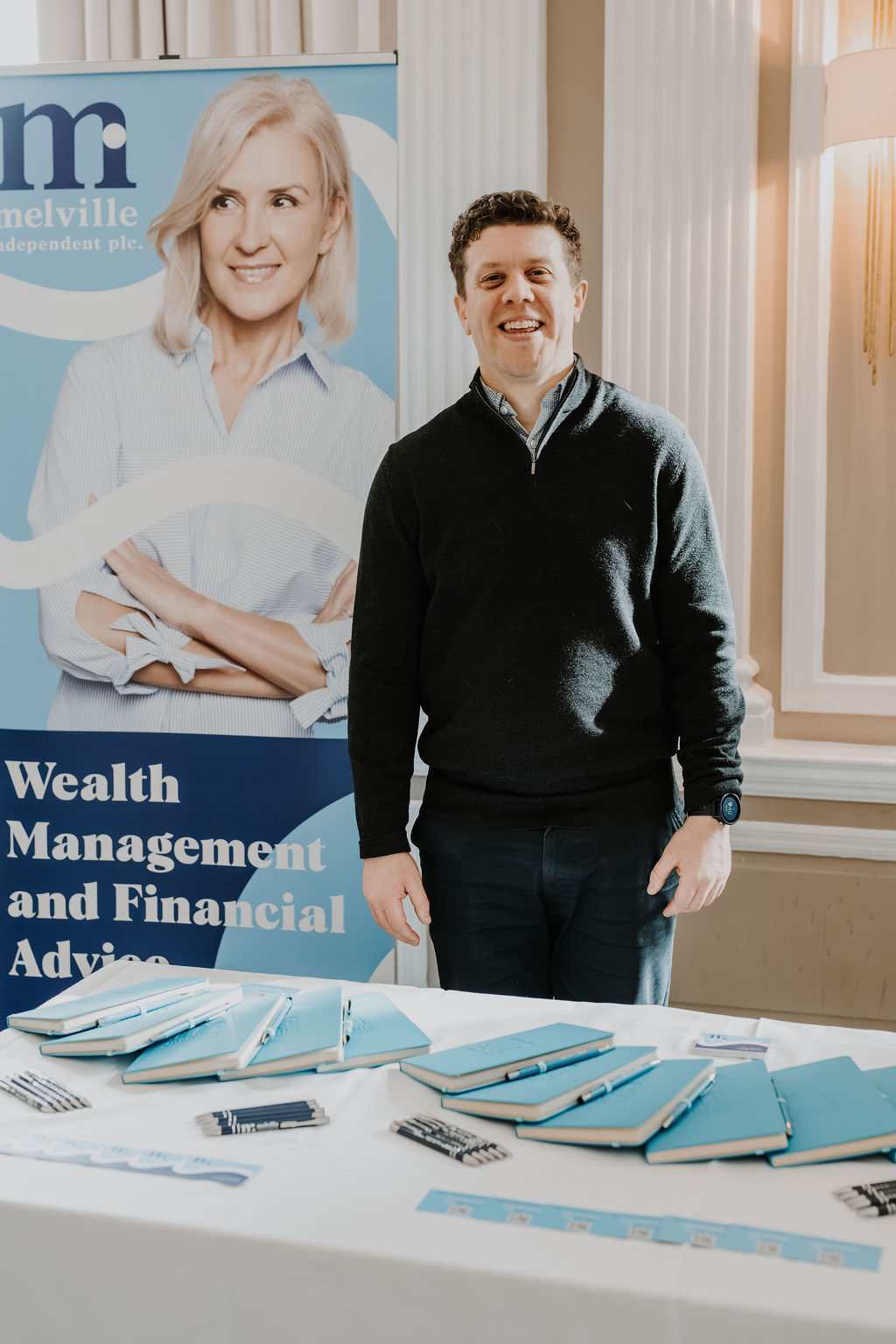
A big thank you to Alex, James and Eloise at Melville Independent for joining our egg webinar and sharing their expertise.
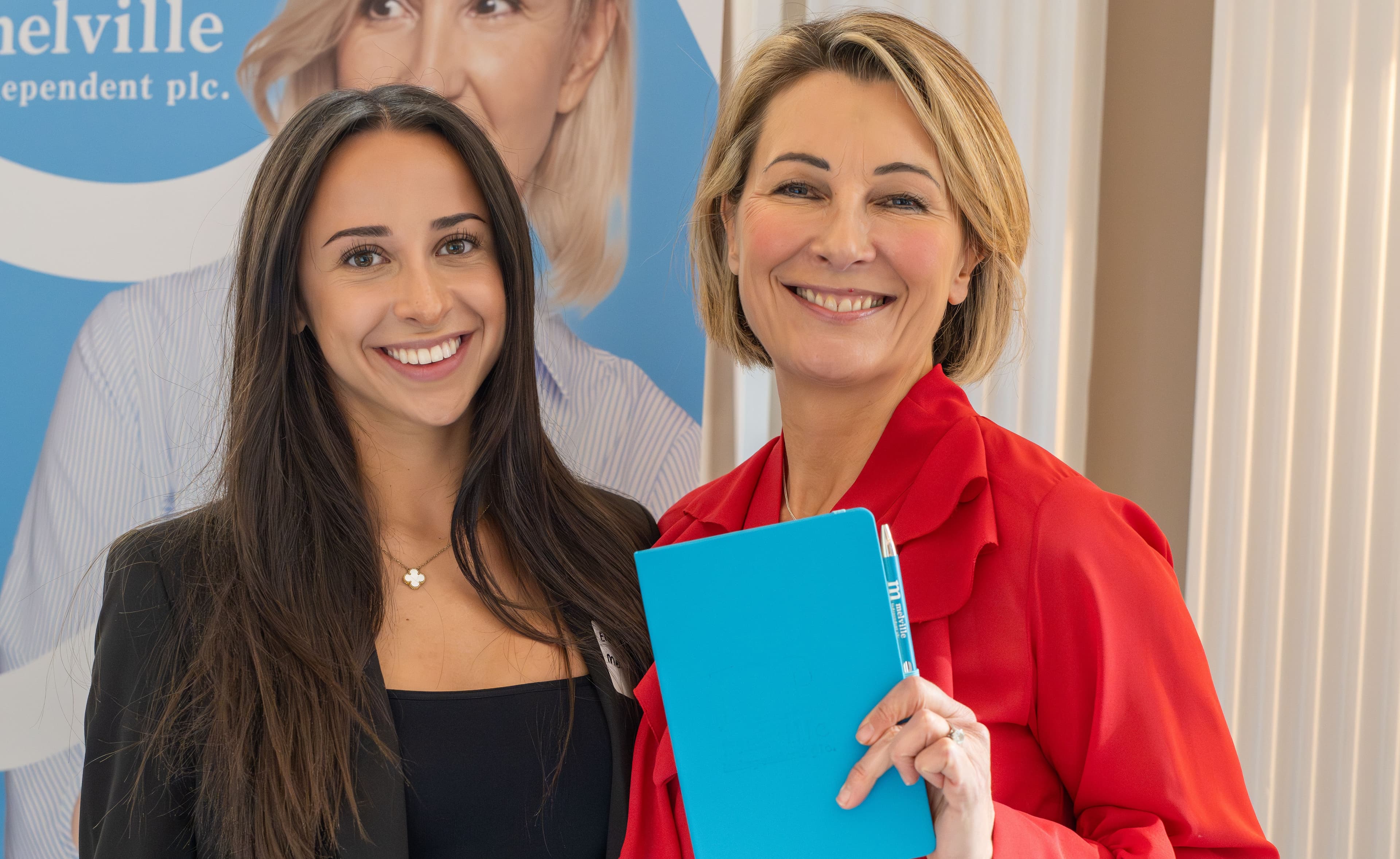
Melville Independent are a Scottish-based company offering independent financial advice. They’ve been helping people with wealth management advice for more than 10 years from their city centre offices on Melville Street Edinburgh.
If you'd like a financial audit, call 0131 260 2760 or send an email to [email protected].
Please note: Tax rules and allowances can change, and the right approach will depend on your individual circumstances.